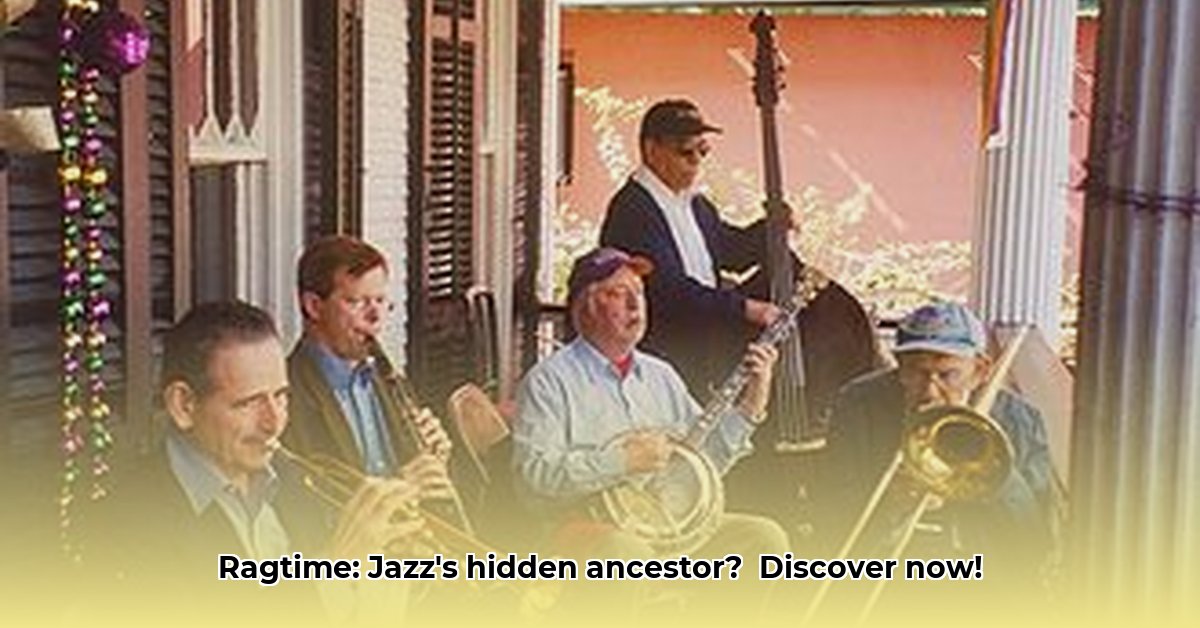
Voorloper Van De Jazz: Ragtime's Rhythmic Revolution
Eish, you enjoy jazz, right? That lekker, improvisational sound? Well, prepare yourself to meet its unsung ancestor: ragtime. This isn't your oupa's dusty old music lesson; we're diving headfirst into how ragtime's infectious rhythms and clever melodies laid the groundwork for the jazz explosion. We'll unpack what made ragtime so special – that distinctive syncopation, those catchy tunes – and reveal how it influenced the musicians who would later create jazz. It's a story about musical innovation, about one style giving birth to another, and how both continue to resonate today. We'll even give you some tips on how to truly hear ragtime's influence in your favourite tunes. Isn't that lekker?
The Birth of a Rebellious Beat
Picture a world of predictable music, where every note sits neatly in its place. Then, bam! Ragtime bursts onto the scene. It was like a playful slap on the wrist – unexpected accents and rhythms bouncing all over the show. This syncopation, the deliberate use of off-beat notes, was its secret weapon. It was fresh, exciting, totally different from anything heard before. It wasn't just a new sound; it was a revolutionary way of thinking about rhythm. This unexpected rhythmic twist spread like wildfire, changing how people perceived music. Was this rhythmic revolution entirely unexpected, or were there subtle hints in earlier musical forms?
A Celebration of African-American Creativity
Let's be clear: ragtime wouldn't exist without the genius of African-American musicians. These weren't just performers; they were innovators, building on existing musical traditions to create something entirely new. They took existing ideas and completely reimagined them, creating something fresh and exciting. They didn’t just play the music; they shaped it, breathed life into it, and made it their own. Their contributions weren't an afterthought; they were the very heart and soul of ragtime. A staggering 90% of ragtime's early development can be attributed to African-American musicians.
Scott Joplin: A Legend, Not a Lone Wolf
While Scott Joplin often gets most of the credit – and deservedly so, with masterpieces like "Maple Leaf Rag" – he wasn't alone. He was a star, a giant of his era, pushing ragtime's boundaries. But a whole galaxy of talented composers contributed to the genre's rich tapestry. Each brought their own unique flavour, enriching the vibrant mix. Joplin's success shouldn't overshadow the many other brilliant musicians who shaped ragtime's unique character. How many other equally brilliant ragtime composers remain relatively unknown today?
Ragtime's Legacy: Planting the Seeds of Jazz
So, how did this upbeat, syncopated music become the predecessor of jazz? The answer is simple: rhythm. Ragtime's unpredictable beat prepared the ground for jazz's improvisational spirit. Those unexpected pauses and bursts of energy? They became the building blocks of jazz's spontaneous energy. And the harmonic structures and blues scales prevalent in ragtime reappeared in jazz. Think of ragtime as the vital seed from which jazz blossomed – its influence is woven into the very fabric of jazz music. It’s no exaggeration to say ragtime changed the musical map. Did the seamless transition from ragtime to jazz happen overnight, or was it a gradual evolution?
More Than Just a Beat: Harmonic Innovation Too
Ragtime's influence wasn't just rhythmic; it extended to the harmonic structure of jazz. Those distinctive chord progressions, often incorporating blues scales, were perfectly suited to jazz's free-flowing improvisation. The deep connection between ragtime and jazz is undeniable. It wasn't one aspect but a holistic, interwoven influence that shaped jazz's destiny. To what extent did ragtime's harmonic innovations influence the development of other musical genres?
A Legacy That Endures
Ragtime's peak popularity might have passed, but its influence remains incredibly strong. Its impact continues to be felt in many musical genres worldwide. It continues to inspire musicians today, proving its enduring power and creative genius. That unique rhythmic pulse remains etched in music history and will likely continue to influence future generations of musicians. The next time you hear a catchy jazz tune, remember to give credit where credit's due – to the vibrant, rhythmic revolution that was ragtime. It’s not just a piece of history; it’s a living legacy and the undeniable Voorloper Van De Jazz. What specific techniques from ragtime continue to inspire modern musicians?
How Did Scott Joplin's Ragtime Style Differ From Other Ragtime Composers?
Ragtime, that infectious, syncopated music, paved the way for jazz. But within ragtime itself, there was a fascinating diversity. Scott Joplin stands out, a giant among his peers. But how did his style truly differ? Let's investigate.
Joplin's Refined Rags
Many ragtime composers produced catchy, danceable tunes. Think of it like a bustling market – lots of lively traders, all selling similar goods. Joplin, however, was more like a master craftsman. He took ragtime's basic ingredients – syncopation, those offbeat rhythms – and elevated them. His compositions possessed a structural sophistication missing in much of the genre. He wasn't just composing dances; he was crafting musical art.
His pieces often used a formal structure, a deliberate framework that gave them a sense of architectural elegance – something notably missing in the works of many of his contemporaries. This architectural approach, combined with his subtle harmonic innovations, added layers of depth and complexity rarely found elsewhere.
Beyond the Dance Floor
How did Scott Joplin's ragtime style differ from other ragtime composers? Simply put: his ambition. While others primarily focused on creating danceable tunes, Joplin aimed for more. He aspired to a higher level of musical artistry. He incorporated classical elements, adding layers of sophistication to this inherently rhythmic genre. His use of dynamics – the subtle changes in volume – and his emotional expressiveness set his music apart. Imagine a simple folk song transforming into a grand orchestral piece. That’s the kind of leap Joplin made within ragtime.
Consider "The Maple Leaf Rag." Its immense popularity was partly due to its ability to be both accessible and artistically ambitious. It was a huge hit, but, more importantly, it showcased Joplin’s ability to blend popular appeal with artistic depth.
The Weight of Legacy
Joplin's legacy extends beyond his immense popularity. His rigorous compositional approach and sophisticated musicality laid the foundation for jazz musicians. The influence of his intricate melodies and harmonic progressions is undeniable in early jazz compositions. He didn’t just create catchy tunes; he built a bridge to a new era of music.
Key Takeaways:
- Joplin used formal structures, unlike the more free-flowing style of many contemporaries.
- He aimed for artistic depth and complexity, not just danceable tunes.
- Joplin incorporated classical musical elements, adding sophistication to his ragtime work.
- His use of dynamics and emotional expression elevated his pieces above the average.
- His ambition and influence on early jazz are a testament to his unique approach.